Measure the physical object.
Capture composition estimates at the point of inspection without destroying the garment or waiting for a broad lab programme.
Product
Weft combines a non-destructive reader, an evidence graph and a portable material passport so the identity of a garment can move safely between production, laboratory, research and consumer systems.
What it does
Point the reader at a garment, a cut panel or a roll. In under a second it returns the fibre percentages it measured, each with a margin of error. Weft then pulls the declaration already on file for that style and puts the two side by side.
If they agree, the style clears and the check is logged. If they disagree, the style is held, the discrepancy is flagged to the right person, and the reading is attached to a laboratory request so the confirmation costs one email instead of one afternoon.

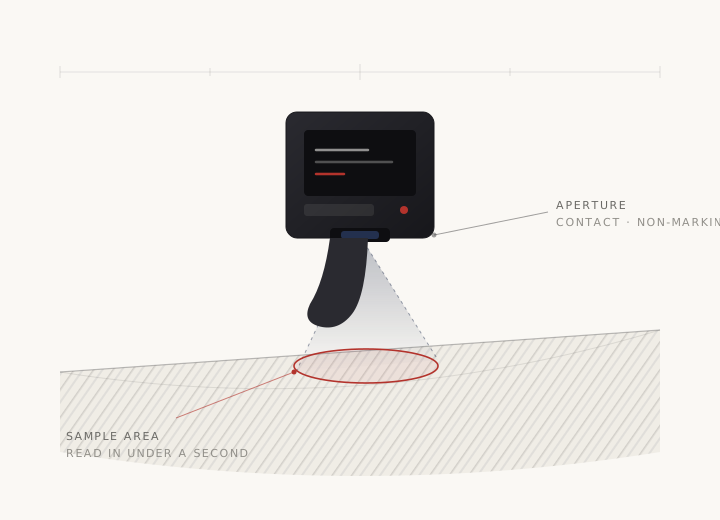
Measurement layerCloth → reading → evidence
Platform architecture
The reader creates the signal. The evidence graph protects its meaning. The passport lets another system use it without stripping away the provenance or uncertainty.
Capture composition estimates at the point of inspection without destroying the garment or waiting for a broad lab programme.
Link declarations, readings, operators, locations, certificates and confirmation results while preserving contradictions.
Expose a structured record to PLM, compliance, research, consumer education or circularity tools through the API.
{{
  "outcome": "mismatch",
  "confidence": "visible",
  "provenance": "attached"
}}
Material passport
A Weft passport makes a disciplined distinction between declared, measured, confirmed and inferred information. That is what lets a downstream product reuse the evidence without turning a screening result into a medical, chemical or regulatory conclusion it cannot support.
Capabilities
Fibre percentages for the common apparel blends, taken through the fabric without cutting a sample or removing a garment from stock. Multiple reads across panels are averaged into a single style result.
Every percentage arrives with its uncertainty. Weft does not round an estimate into a fact, and it will decline to answer rather than report a number it cannot stand behind.
Pull the expected composition from your PLM, a supplier submission, a purchase order or the care label itself. Weft handles the comparison and the tolerance rules you set.
Declarations, certificates, readings, operators, timestamps and lab results live in one record. Anyone with access can see how a conclusion was reached without asking the person who reached it.
Styles are ranked by the chance a declaration is wrong and the cost if it is. Your laboratory budget goes where it changes a decision rather than where it confirms one.
Set the tolerance, the hold behaviour and who hears about it. Mismatches route to a named owner with a due date, not into a shared inbox.
Produce a complete history for a style, a supplier, a season or a shipment as a signed export, ready for a retailer questionnaire or a regulatory request.
Workflow
No new inspection stage, no laboratory on site, no retraining. The reader goes where the fabric already is.
Decide what counts as agreement for each product family. A knit programme and an outerwear programme rarely want the same threshold, and Weft does not force them to.
Final inspection, intake, incoming goods, the sample room. Anywhere a person already holds the product and a decision follows.
Agreements clear silently. Only disagreements interrupt anybody, and they arrive with the reading, the declaration and the history already assembled.
Send the queue to your laboratory of choice. Results return to the same record, closing the loop and improving the ranking for next season.
Benefits
A substitution found at final inspection is a supplier conversation. The same substitution found after delivery is a recall, a markdown or a claim.
Instead of testing a token sample of the range, you test the styles where a wrong declaration would actually hurt.
When the person who ran the check has moved on, the record still explains what was done and why.
A measurement with a margin of error is harder to argue with than a suspicion, and easier to resolve than a formal dispute.
What you publish about your materials is backed by something you generated, not only by something you were sent.
The check happens where the product already stops. The system speaks up only when a human decision is genuinely needed.
Questions
No, and we would not trust a company that said it did. Accredited laboratory analysis remains the reference method, and some questions can only be answered there.
What Weft changes is how you choose what to send. Screening every style yourself and confirming the ones that look wrong is faster and cheaper than sampling blindly and hoping.
The reader is built around the blends that dominate apparel — cotton, polyester, viscose, wool, nylon, acrylic, linen and elastane, alone and in common combinations.
Performance varies by blend, construction and finish, and we will tell you exactly where it is strong and where it is not before you buy anything. Unusual constructions are worth testing against your own range first.
No. The reading is taken through the surface on contact. Nothing is cut, dissolved or marked, so stock can be read and then sold.
It says so. Below a confidence threshold you set, Weft returns an inconclusive reading and suggests either another sample or a laboratory confirmation.
A system that always produces an answer is not more useful than one that admits its limits — it is just harder to trust.
Directly, no. Trace chemistry is a laboratory question and we will not pretend otherwise.
What Weft does is narrow the search: it combines the measured composition, the construction and the history of a supplier and product category into a ranked view of which styles are worth testing for a given finish. That is a screening aid, not a chemical result.
Most teams begin with a single site and one product family. Readers arrive configured, the platform runs in the browser, and the first useful comparison usually happens the same week.
Connecting your PLM and supplier records takes longer and is worth doing properly. We do that alongside you rather than handing over a specification.
You do. Your measurements, records and exports are yours, and you can take them with you. See Security for how they are stored and who can reach them.
Send us a style you have argued about with a supplier. We will show you the reading, the declaration and the gap between them.