01
Uncertainty stays visible
Every number we report carries the range around it. Hiding error bars makes a product feel more confident and makes its users less safe. We would rather be trusted than admired.
Company
Weft exists to change one thing about that: to make measuring a material as ordinary as reading its label, and considerably more reliable.
Why we exist
Apparel supply chains grew longer and faster than anyone’s ability to verify them. What a garment is made of now travels as a declaration, copied from a form to a spec sheet to a label to a website, growing more confident at every step and no more true.
The industry’s response has been more paperwork: certificates, questionnaires, scores, pledges. All of it describes the same underlying evidence, and most of it originates with the party being checked.
We think the missing piece is not another rating. It is an instrument — something that looks at the actual cloth and reports what it finds.
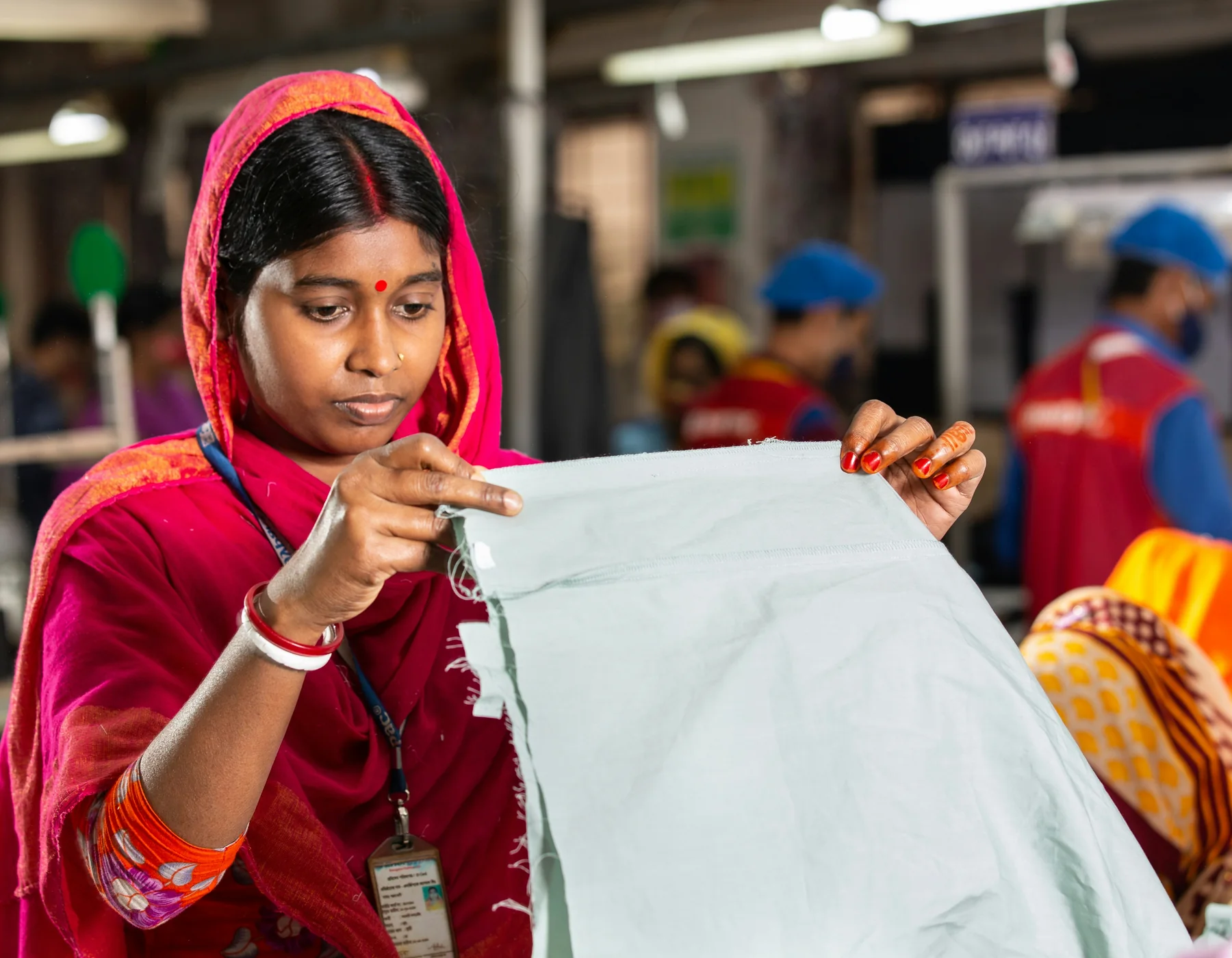
Mission
Make every material claim in fashion checkable by the person it affects.
Not scored. Not certified. Checkable — by a quality inspector on a Tuesday afternoon, in the time it takes to pick up a garment and put it down again.
If we do this properly, a claim about a fabric stops being a matter of who you believe and becomes a matter of what was measured.
How we build
01
Every number we report carries the range around it. Hiding error bars makes a product feel more confident and makes its users less safe. We would rather be trusted than admired.
02
Reducing a garment to one score requires weighting incommensurable things and hoping nobody checks the arithmetic. That approach has already collapsed once in this industry. We measure specific properties and report them separately.
03
When the evidence will not support a conclusion, the correct output is no conclusion. A system that always answers teaches people to stop reading the answer.
04
We tell customers which blends and constructions the reader handles well and which it does not, before they buy. Quality teams cannot adopt a tool whose failure modes are a surprise.
Position
There are plenty of companies willing to tell consumers which clothes are good. There are very few willing to hand a professional a device and let them find out for themselves. We would rather be the second kind, and we think that is also where the durable business is.
Brands, retailers, manufacturers, resale platforms and sorters — anyone whose decisions change depending on what a fabric actually is.
Take payment to influence a result, publish a ranking we cannot defend line by line, or claim a measurement the instrument cannot make.
A small team split between instrument work and software. We hire people who have shipped hardware into unglamorous environments and people who have been on the receiving end of a compliance audit.
Composition first, because it is the claim that underpins every other claim. The properties that sit on top of it — finishes, treatments, recycled content — come next, and only when we can measure them honestly.
The category
Software teams do not trust a service because a document says it is healthy. They instrument the system, preserve events and inspect the evidence when something disagrees.
Weft applies the same architecture to textiles: measure the object, link the sources, route the exception and keep enough context for another person or system to reproduce the decision.
Generate a physical signal where the product is handled.
Preserve style, panel, supplier and document context.
Use laboratory capacity where it can change a decision.
Carry provenance, uncertainty and limits into every interface.
Customers, partners, laboratories and people who want to build this with us all come through the same door.